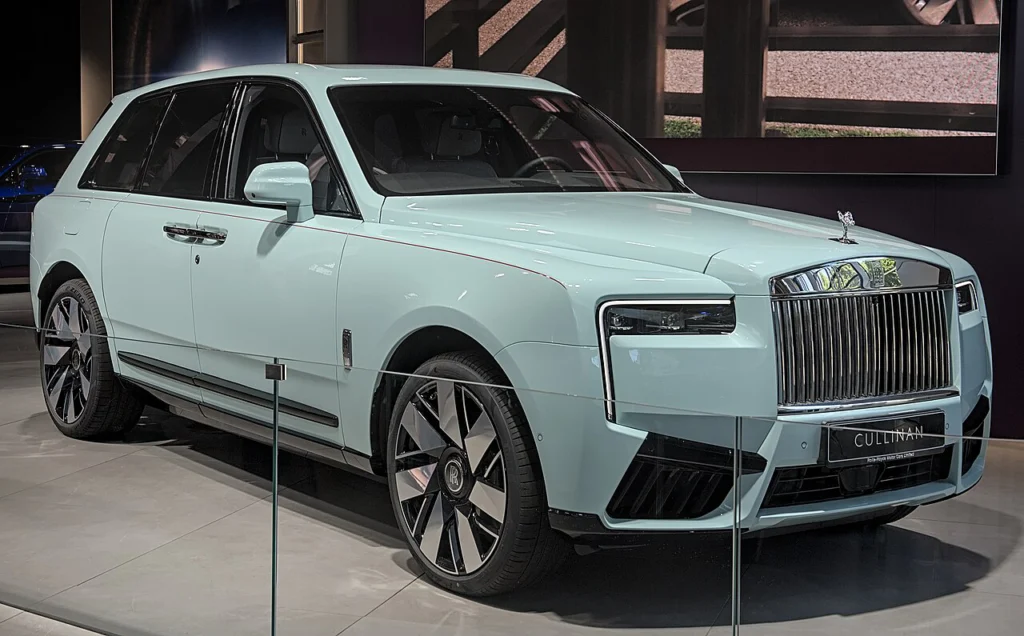
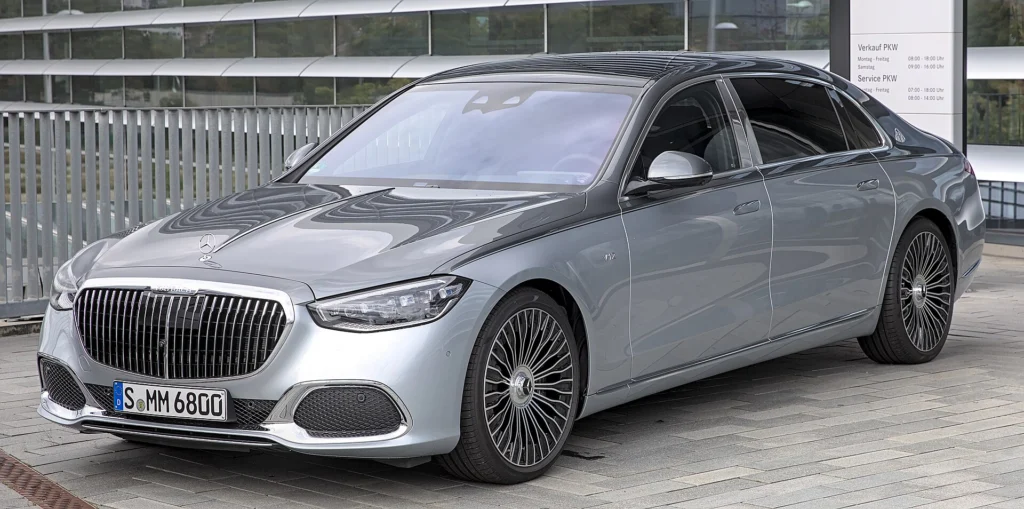
The Bentley Continental GT S is a fast luxury car. The Aston Martin DB12 S is a sporty GT. The Bentley can put the Aston in the rear view with ease if it wants, but the Aston is simply the better drivers car. This wouldn’t make any sense if there was a big difference in price. But these are $301,300 and $276,000 respectively.
Assuming money is no issue (or that you can rent an exotic car), there’s only one thing to consider: How do you want to drive? If you prefer a big premium, more armchair cruiser, the Continental GT S is the one for you. If you prefer a sports car, the DB12 is for you.
They are two cars that will surely be compared to each other by wealthy buyers - and for good reason. Both have V8 engines. But the similarities between the two end there. The Bentley weighs in at 5,790 lbs while the Aston Martin weighs around 4,000.
The Bentley’s drivetrain is complicated. It works like a regular plug-in hybrid - with a 512-hp twin-turbo V8 under the hood, plus a 187-hp electric motor. The Aston is much simpler. It uses the same twin-turbo V8 found in some AMGs, with 690 hp. The rear wheels are the only ones powered.
In the Corners
The Bentley Continental GT is bigger and heavier than a DB12. Because it’s so heavy, it behaves a little different in the corners - but not as much as you might think. Once the car is in motion, you forget it because it seems to hide the weight well. The much lighter Aston Martin DB12 gives you much less weight to manage in a corner, and a steering feel that gives you precise control and feedback.
The Bentley is so soft that you float over terrible pavement. 48-volt anti-roll stiffness still prevents leaning when you corner. The Bentley’s steering is slower and more vague, feeling soft and light. Aston rides much firmer, and you’ll feel some impacts, but the steering is fast, well-weighted, provides real feedback, and has some kickback.
With all of the weight, you would think it will plow into the outside tire, but thanks to several factors - including rear-axle steering, active anti-roll, and all-wheel drive - it can be hustled surprisingly fast.
Rain did not stop the Bentley. The Bentley was quicker than the Aston in the rain and on slippery road. Its power was applied much better to the road surface, going faster out of turns with hardly a shudder from the wheels. The Aston had a difficult time gripping the road, mainly because it is rear-wheel drive. The Bentley’s electric motor provides an instant response, whereas the Aston has turbo lag that makes it seem sluggish below 3,000 rpm. The Aston feels savage when it is fully extended, and the acceleration is still building toward the 7200-rpm limiter. Bentley has a faster-shifting dual-clutch gearbox with paddles, but it shifts so smoothly that you’ll mostly end up just leaving it in Drive; it’s not as exciting as the Aston.
Both cars are equipped with optional sports exhausts. The Bentley is louder, with a significant bass underpinning at low revs. The Aston, meanwhile, has a titanium exhaust that snarls and spits like an enraged cat as the engine wails toward 7200 rpm.
The Bentley’s EV mode can carry you silently along up to 81 mph, and you’ll want to use it for any kind of quiet early-morning arrivals or if you’re parking late at night and need to be discreet. In hybrid mode, it’s a bit annoying having the V8 cut in and out, so I often turned the car to Sport mode. Over 800 miles, I got an average of 22 mpg, and the Aston Martin stayed in the teens.
Classy Cabin
The Bentley has a classy cabin that drips classy materials from roof to floor, and the thick organ-stop pulls that control the metal vents are lovely. Bentley’s optional rotating screen is straightforward, with an easy way to control the rest of the interior technology, and while the space in the back seats is limited, it will do for short trips or small kids. The Aston has a special vibe that seems like it was designed and built by artisans, but it’s not as plush as the Bentley’s. The rear seats are still part of a 2+2, but are really only good for providing more luggage space. In terms of cargo capacity, the Aston has a 9.3 cubic foot trunk while the Bentley has 9.2 cubic feet.
The Continental is far more common than the DB12, which is a rarer bird. See another Continental, and there is no surprise or eyebrow raise, other than to look at the way the owner has specced the thing.
If you’re renting either of these cars in New York, there’s a law that limits what a driver can owe for damage to either the lower of the repair cost or the pre-damage value minus salvage. This doesn’t include loss-of-use or administrative fees. A cap on the daily damage waiver price does not apply to cars over $50,000 MSRP, but the waiver still must be “fair market value”.
The Ultimate Luxury Grand Tourer
Take the Bentley if you’re looking for the ultimate luxury grand tourer. The hybrid gives the real-world pace that counts. It’s the ideal car for a thousand-mile day. The Aston is the driver’s choice, one that feels hand-built, a muscular sports car with far more connection and excitement.